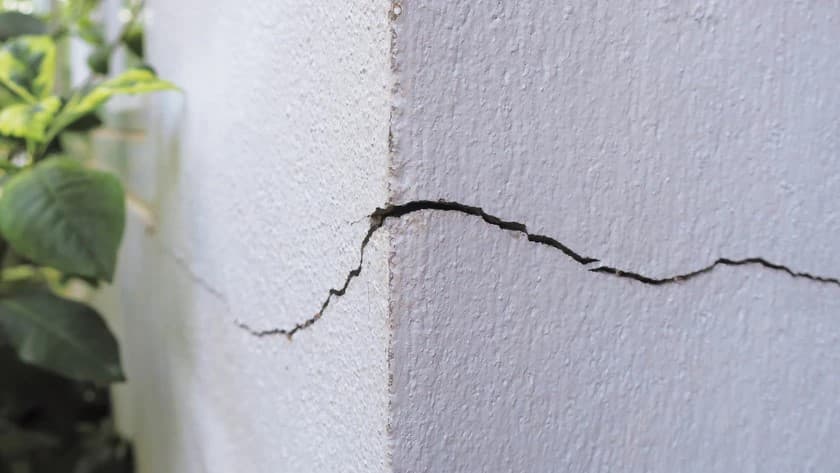
An earthquake lasts seconds.
The financial consequences can last much longer.
If you own a home in Greece, earthquake is one of the risks worth looking at before anything happens — not after the first strong tremor makes you wonder what your policy actually covers.
And there is one point to understand from the beginning:
Having home insurance does not automatically mean you have earthquake cover.
You need to check it.
The short answer
Earthquake insurance may cover damage to the insured building, the contents of the home, or both, depending on the policy.
Before relying on the cover, check:
- whether earthquake is explicitly included,
- whether the building, contents or both are insured,
- the amount insured,
- the earthquake excess,
- any limits,
- and the conditions that apply to the property.
A policy heading that says “earthquake” is only the beginning.
You need to understand what sits underneath it.
Why earthquake matters in Greece
For somebody coming from another country, earthquake may not be the first risk they normally associate with home insurance.
In Greece, it deserves much more attention.
The country has significant seismic activity and serious earthquakes have caused major damage repeatedly.
That does not mean every earthquake destroys a home.
Damage can range from relatively small cracks to problems with walls, floors, pipes and installations, or much more serious structural damage.
The important question is not:
“Will there definitely be a major earthquake?”
It is:
“If my home suffered serious earthquake damage, could I comfortably pay for the repair myself?”
For many property owners, the answer is no.
That is the financial reason earthquake insurance deserves a proper look.
Is earthquake automatically included in home insurance?
No.
This is one of the easiest assumptions to make and one of the most important to avoid.
Depending on the policy and the insurer, earthquake cover may:
- be included in a particular package,
- need to be selected separately,
- carry its own conditions,
- have a separate excess,
- or not be available for a particular property.
So never rely on the phrase:
“The house is insured.”
Ask instead:
“Is the house insured for earthquake?”
And then:
“What exactly does that earthquake cover apply to?”
The property itself matters
Earthquake cover is not assessed in isolation from the home.
The insurer may need to look at details such as:
- location,
- year of construction,
- construction type,
- condition of the building,
- size,
- how the property is used,
- whether it is a permanent or holiday home,
- and whether important work has been carried out since it was built.
That is why an apartment built recently, an older stone house and a renovated holiday home should not automatically be treated as the same risk.
The cover has to fit the actual property.
Older homes need particular attention
The age of a home does not tell you everything about its condition.
But it can matter when earthquake cover is being considered.
In the material we use for ERGO cases, buildings insured for earthquake are generally expected to date from 1960 onwards and to meet the earthquake-construction requirements that applied when they were built.
That makes older properties a special case.
If you own a pre-1960 house, particularly an old stone home, do not assume earthquake cover is available just because the property has been renovated.
Ask first.
The insurer may need more information before deciding whether the risk can be accepted.
“Renovated” is not enough information
This becomes especially important with older homes bought by foreign owners.
A property may look completely renovated.
That does not automatically tell us what has changed structurally.
A renovated kitchen, new bathrooms and fresh plaster are not the same thing as:
- new electrical wiring,
- new plumbing,
- a replaced roof,
- structural reinforcement,
- or documented engineering work.
So if you own an older property and earthquake cover matters to you, try to identify exactly what work has been carried out and when.
If structural work exists, drawings, engineer reports or other documentation may become useful when the insurer assesses the property.
Renovation can be relevant.
It is not an automatic guarantee of earthquake acceptance.
What can be insured?
Depending on the policy, earthquake cover can apply to:
The building
The structure of the home and the permanent elements included under the policy definition.
That may include more than the main house.
A property can also have:
- storage buildings,
- covered parking,
- auxiliary structures,
- a swimming pool,
- walls,
- or other special constructions.
Do not assume these are automatically included.
They need to be declared correctly and reflected in the insured property and amount where required.
The contents
Furniture, electrical appliances, household equipment, clothes and other belongings may also be insured.
Again, the key word is may.
Check whether contents are included and for what amount.
High-value items may have separate limits or need specific declaration.
The amount insured matters as much as the cover
It is possible to have earthquake cover and still have a serious problem if the home is insured for the wrong amount.
For the building, the important figure is normally connected to rebuilding cost, not the market price you paid for the property.
Those are different things.
A house may have a high market value because of:
- location,
- land,
- sea view,
- scarcity,
- or demand.
None of those automatically tells us what the building would cost to reconstruct.
The insured amount needs to make sense for the actual home.
What happens if the home is underinsured?
Imagine the proper insurable value of the building is:
€100,000
but the policy insures it for:
€80,000
The property is insured for 80% of the amount it should have been.
Depending on the policy terms, that underinsurance can affect not only a total loss but also a smaller claim.
For example, if a covered loss were €1,000 and a proportional rule applied:
€1,000 × 80% = €800
The claim could therefore be reduced before any excess or other policy terms are considered.
This is why choosing the insured amount is not a formality.
It can affect the claim itself.
The earthquake excess can be a large number
An excess is the part of a covered loss that remains with you.
It is not the same thing as an exclusion.
If an earthquake excess is expressed as a percentage of the insured amount, the number can become significant.
For example:
Building insured for €100,000
Earthquake excess 2%
The excess would be:
€2,000
If a covered earthquake caused €1,000 of damage, that loss would remain below the excess.
The earthquake cover exists, but financially there would be nothing for the insurer to pay on that example.
If the covered loss were €5,000, the claim would then be assessed above the applicable excess, subject to the rest of the policy terms.
The lesson is simple:
Do not ask only whether earthquake is covered. Ask what the excess means in euros for your own home.
Underinsurance and excess can affect the same claim
This is where many people misunderstand how a policy may work.
Using a simple illustration:
Correct insurable value: €100,000
Amount actually insured: €80,000
So the property is insured at:
80%
Now imagine a covered earthquake loss of:
€5,000
If the proportional rule applies:
€5,000 × 80% = €4,000
If the earthquake excess were 2% of the €80,000 insured amount:
2% × €80,000 = €1,600
Illustratively:
€5,000 loss → €4,000 after underinsurance adjustment → €2,400 after the €1,600 excess
The exact claim calculation always depends on the contract.
But the example shows something important:
A loss can be covered without the full repair cost being reimbursed.
Previous earthquake damage must be disclosed
If a property has suffered earthquake damage in the past, that matters.
The insurer may ask for further information or an inspection before deciding whether to accept the risk.
In some cases, an engineer's report may be requested.
There is a practical reason for this.
If a crack appears or worsens after a future earthquake, there needs to be a way to distinguish new damage from damage that existed before the insurance started.
A policy is intended to insure future covered events.
It is not intended to retrospectively insure a pre-existing defect or loss.
What about structural defects?
An earthquake can make an existing weakness visible.
That does not necessarily mean the earthquake created the whole problem.
This distinction can matter where a known construction defect, prior damage or failure to comply with relevant construction requirements existed before the policy.
The important point for the owner is not to become an engineer.
It is much simpler:
If you know something relevant about the building, declare it before the policy is issued.
The wrong time to discover that information mattered is after a claim.
What if the property has been legalised later?
This also needs careful checking.
A building that has been regularised or legalised later should not automatically be assumed to qualify for earthquake cover.
The actual construction history and the insurer's acceptance rules still matter.
For unusual, older or legally complex properties, the safest approach is to ask for confirmation before relying on earthquake cover.
Holiday homes and owners living abroad
For foreign owners, earthquake insurance often sits inside a larger question:
How is this property actually being used?
A home that you visit for several weeks a year is different from a permanent residence.
If you spend most of the year abroad, the insurer may also want to know:
- how long the property stays empty,
- whether somebody checks it,
- how often it is visited,
- and whether it is rented to anybody else.
These questions do not mean earthquake insurance is impossible.
They mean the policy must be based on the real use of the property.
This is especially important because a home owned by somebody abroad may also be classified as a holiday or secondary residence rather than a main residence.
What if you rent the home to guests?
Tell the insurer.
Short-term guest use should not be hidden inside a normal household description.
The rental activity may require different cover or a different product.
Earthquake is only one part of the problem.
The policy first has to describe the use of the property correctly.
What does earthquake insurance cost?
There is no single price.
The cost can depend on factors such as:
- the location of the property,
- construction,
- year built,
- size,
- insured amount,
- whether building, contents or both are insured,
- the programme selected,
- and the other covers included.
This is why a price from somebody else's house tells you very little about your own.
A cheap policy is not automatically good value if the insured amount, excess or acceptance conditions are wrong.
Compare the cover first.
Then compare the price.
What about ENFIA?
Earthquake can also matter because the Greek ENFIA property-tax reduction for insured homes is linked to specific insurance requirements.
Earthquake, fire and flood need to be considered together under the applicable rules.
But do not reverse the logic.
The tax reduction should not be the reason you choose an inadequate insured amount or unsuitable policy.
First make sure the insurance makes sense for the property.
Then check whether it also meets the current ENFIA requirements.
Five questions I would ask before accepting earthquake cover
- Is earthquake definitely included?
- Does it cover the building, the contents or both?
- Is the insured amount realistic for rebuilding?
- What is the earthquake excess in actual euros?
- Has the insurer been given the correct age, construction, renovation and use of the property?
If those five answers are clear, you already understand far more than somebody who has simply looked for the word “earthquake” on the quotation.
If you own an older or unusual property
This is where I would slow the process down.
Tell me:
- when the home was originally built,
- what it is made from,
- what structural work has been carried out,
- when it was renovated,
- what documentation exists,
- how you use it,
- and whether it has suffered previous damage.
Then the question becomes:
“Can this particular property be insured for earthquake, and on what terms?”
That is a much better question than assuming the answer is yes or no because of its age alone.
If you already have a policy
Do not start by replacing it.
Find the earthquake section.
Check:
- whether earthquake is included,
- what property it applies to,
- the insured amount,
- the excess,
- the exclusions,
- and whether the description of the property is still accurate.
If the policy is doing what you need, there may be nothing to change.
If something is unclear, then you know exactly what to ask.
If you are buying or insuring a property now
Get the important information before the quotation.
For an older house in particular, try to have:
- the construction year,
- construction type,
- roof type,
- renovation history,
- details of structural work,
- actual use,
- and any engineering documents you already have.
You do not need to become an insurance expert.
You just need to describe the property accurately enough for the insurer to make the right decision.
The point is not to have the word “earthquake” on the policy
The point is to know what will happen if you ever need to use it.
What is insured?
For how much?
What stays with you?
What conditions apply?
And was the property described correctly from the start?
That is what makes earthquake cover useful.
Ask me about your property
I'm George Papadimitriou, an insurance agent based in Chania, Crete, and an ERGO network partner.
If you own a home in Greece and earthquake cover is one of your concerns, tell me about the property.
An older stone house, a renovated holiday home, a property you own while living abroad or an existing policy you cannot easily read are all reasonable places to start.
I can explain the available proposal and its important terms in English.
Ask about earthquake cover · Ask about your existing policy
Available cover and acceptance depend on the insurer's assessment and the specific policy terms.