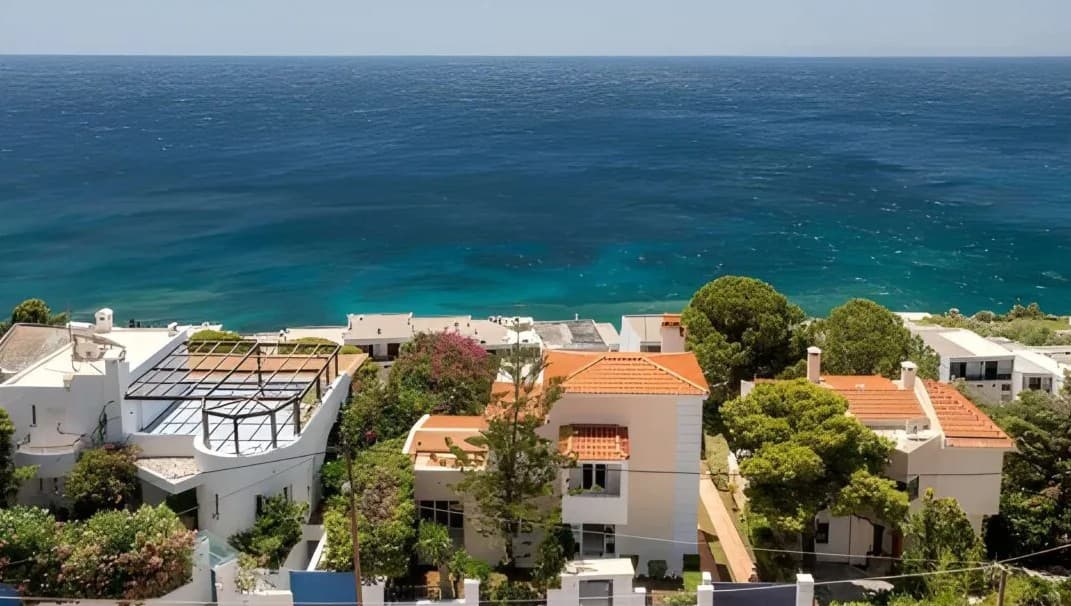
Buying a property in Greece is an important decision.
For many foreign owners, it may be a holiday home, a long-term residence, an investment property, a retirement plan or part of a wider relocation decision.
But after the purchase, one practical question often appears:
How should the property be protected?
Home insurance in Greece can be simple when it is explained clearly. However, foreign property owners often face a few common difficulties. They may not know what is usually covered, whether earthquake cover is included, how contents are treated, or what questions they should ask before choosing an insurance policy.
This guide is not legal, tax or financial advice. It is a practical insurance checklist for foreign property owners who want to understand what to review before protecting a home in Greece.
If you are still at the beginning of your research, you can also read our general English guide: Insurance in Greece for Foreign Residents.
Why foreign property owners should review insurance carefully
Owning a property in Greece is not the same as understanding how insurance works in Greece.
A foreign owner may have experience with home insurance in the UK, the US, Germany, France, Israel or another country. But insurance terms, policy structure, exclusions, deductibles and underwriting rules can differ from one market to another.
That is why the first question should not be only:
“How much does home insurance cost in Greece?”
A better question is:
“What exactly am I protecting, against which risks, and under what conditions?”
For example, a property owner may need to understand:
- whether the building is insured
- whether the contents are insured
- whether earthquake cover is included or optional
- whether the property is considered a permanent residence or a holiday home
- whether the home is rented, empty for long periods or used by guests
- what limits and deductibles apply
- whether liability cover is included
- whether the insured value is realistic
A low price may look attractive, but it does not always mean that the property is properly protected.
Building insurance and contents insurance are not the same thing
One of the most important distinctions in home insurance is the difference between:
- building cover
- contents cover
Building cover
Building insurance usually refers to the structure of the property itself.
This may include the main construction of the home and the parts that form the property as a building. Depending on the policy, this may relate to risks such as fire, explosion, weather events, water damage or other covered events.
The important point is that the insured value of the building should make sense.
If the building is underinsured, the owner may believe they are protected, but the amount insured may not be enough in the event of a serious loss.
Contents cover
Contents insurance refers to the items inside the property.
This may include furniture, appliances and personal belongings. For foreign owners, contents cover is especially important when the property is furnished, used as a holiday home, or kept ready for family visits or longer stays.
The building and the contents are different parts of the insurance discussion.
A property can be insured for the building only, for contents only, or for both, depending on the needs of the owner and the available programme.
Earthquake cover in Greece should never be assumed automatically
Greece is a seismic country.
For that reason, earthquake cover is one of the most important points foreign property owners should check before choosing home insurance in Greece.
Many people assume that if they have home insurance, earthquake is automatically included.
That is not always the case.
Depending on the insurance programme, earthquake cover may be included, optional, subject to specific terms, or connected with a deductible. This is why foreign owners should ask clearly:
- Is earthquake cover included?
- Is it optional?
- What deductible applies?
- Does it cover the building, the contents or both?
- Are there age or construction requirements for the property?
- Are there any exclusions or underwriting conditions?
This is especially important for owners of older properties, renovated homes, detached houses, stone properties, holiday homes or properties in areas where seismic risk is a serious consideration.
Permanent home, holiday home or rental property?
How the property is used matters.
A home that is used as a permanent residence may not have the same insurance profile as a holiday home that remains empty for long periods.
A foreign property owner should explain clearly how the property is used:
- permanent residence
- holiday home
- seasonal residence
- long-term rental
- occasional family use
- short-term guest use
- property kept empty for part of the year
This matters because some insurance programmes may treat permanent homes and holiday homes differently.
If the property is a holiday home, the owner should not assume that the same terms apply automatically as they would for a permanent residence.
If the property is rented, the rental use should also be discussed clearly.
Long-term rental and short-term guest use are not the same thing from an insurance perspective.
What basic home insurance in Greece may include
Depending on the selected insurance programme, home insurance may include a range of covers.
Some basic fire-related covers are often central to home insurance, such as:
- fire
- lightning
- smoke
- explosion
- fire from forest
- fire damage during firefighting
- aircraft impact
However, even when a cover sounds simple, the exact terms matter.
The owner should understand whether the cover applies to the building, the contents, or both.
The owner should also check if there are exclusions, limits, deductibles or documentation requirements.
A useful rule is simple:
Never rely only on the name of the cover. Always understand how it works in the policy.
Weather-related damage and water damage need careful review
Foreign owners often ask about weather-related risks.
Depending on the policy and programme, home insurance may include or offer cover for events such as:
- flood
- storm
- heavy rain
- snow
- hail
- pipe damage
- water pumping expenses
- investigation costs for water damage
These are practical risks for homeowners.
A water leak, a broken pipe or a serious storm can create significant cost, even when the building itself remains standing.
But not every insurance option treats these risks in the same way.
That is why the owner should ask:
- Are weather-related events included?
- Is pipe damage covered?
- Are investigation costs for water damage included?
- Are there sub-limits?
- Is there a deductible?
- Does the age of the building or installation matter?
For many property owners, these details are just as important as the headline price.
Liability cover can be important for property owners
Home insurance is not only about damage to your own property.
Sometimes, a property-related incident can affect other people.
For example:
- water damage may affect a neighbouring apartment
- part of the property may cause damage to a third party
- a tenant, neighbour or visitor may be involved in a claim
- the owner may face responsibility connected with the property
Depending on the programme, liability cover may be available for certain cases.
Foreign owners should ask whether liability is included, what it applies to, and what limit is provided.
This is especially important for:
- apartment owners
- landlords
- owners of holiday homes
- owners who are not always present in Greece
- owners of properties used by family members, tenants or guests
Liability is often overlooked until something happens.
Insured value matters more than many owners think
The insured value is not just a number.
It affects how the policy works and how meaningful the protection may be.
A foreign property owner should avoid choosing an insured value only to reduce the premium.
If the building or contents are insured for too low an amount, the owner may face problems in a serious claim.
Questions to ask include:
- What value should be insured for the building?
- What value should be insured for contents?
- Are there minimum recommended values per square metre?
- Does the property type affect the calculation?
- Are there special items of high value?
- Should any valuable items be declared separately?
For example, furniture, electronics, artwork, carpets, collections or other valuable items may need special attention.
The goal is not to overpay.
The goal is to avoid a policy that looks cheaper but does not reflect the real value of what needs to be protected.
Some covers may have limits, sub-limits or deductibles
Home insurance is not an unlimited promise.
Many covers may have specific limits or sub-limits.
A policy may include a cover, but only up to a certain amount.
For example, depending on the programme and terms, there may be specific limits for issues such as:
- glass breakage
- short circuit
- theft-related damage
- temporary relocation expenses
- loss of rent
- debris removal
- professional fees
- food deterioration
- replacement of locks
- liability
- legal protection
There may also be deductibles.
A deductible is the amount or percentage the insured person may need to bear before the insurance payment applies.
This is why it is not enough to ask:
“Is it covered?”
It is better to ask:
“Is it covered, up to what amount, under what conditions, and with what deductible?”
Holiday homes need special attention
Many foreign property owners in Greece own a holiday home.
This can be a beautiful asset, but it can also create specific insurance questions.
A holiday home may remain empty for weeks or months. It may be visited seasonally. It may contain furniture and appliances. It may be located near the sea, in a village, in the countryside or on an island.
This does not mean it cannot be insured.
It means the insurance discussion should be more careful.
Foreign owners should clarify:
- how often the property is occupied
- who has access to it
- whether it is rented
- whether it has security measures
- whether it contains valuable items
- whether the main residence is also insured
- whether any special condition applies to holiday homes
If the property is used as a short-term rental, this should be discussed separately.
A standard home insurance policy should not automatically be assumed to cover all risks connected with guest use or short-term rental activity.
Foreign buyers, Golden Visa investors and property protection
Some foreign property owners buy in Greece as part of a wider relocation, investment or residence plan.
Others may buy a home for family use, retirement, long stays or future relocation.
In all cases, insurance should be part of the after-purchase checklist.
A foreign owner may speak with a lawyer, notary, accountant, real estate agent or property manager during the purchase.
But insurance is often discussed late.
A practical approach is to review insurance soon after the property details are clear, especially if:
- the property has already been purchased
- the owner is not permanently in Greece
- the property will remain empty
- renovation works are planned
- the property will be rented
- the owner needs earthquake cover
- there is valuable furniture or equipment inside
- the owner needs English-speaking explanation
Insurance is not only a formality.
It is part of protecting the property after the purchase.
Practical checklist for foreign property owners in Greece
| What to check | Why it matters |
|---|---|
| Building cover | Protects the structure of the property, but the insured value must be realistic. |
| Contents cover | Furniture, appliances and personal belongings may need separate attention. |
| Earthquake cover | Greece is a seismic country, and earthquake cover should not be assumed automatically. |
| Fire and forest fire | Fire-related covers are central in home insurance, but the exact terms matter. |
| Weather-related damage | Flood, storm, snow and hail may depend on the selected programme. |
| Water damage | Pipe damage and water-related expenses may not be included in every basic option. |
| Liability cover | Damage to neighbours, tenants, visitors or third parties can create financial exposure. |
| Holiday home use | A property that is not permanently occupied may need a different review. |
| Rental use | Long-term rental and short-term guest use should be discussed separately. |
| Insured value | The insured amount should make sense for the property and the selected cover. |
| Valuable items | Expensive items may need to be declared clearly. |
| Policy limits | Some covers may have sub-limits, exclusions or deductibles. |
| Deductibles | The owner should understand what amount may remain their responsibility. |
| English explanation | Foreign owners often benefit from clear guidance before signing. |
Questions to ask before choosing home insurance in Greece
Before choosing a policy, a foreign property owner can ask:
- What exactly is insured: building, contents or both?
- Is earthquake cover included or optional?
- What deductible applies to earthquake or other serious losses?
- Is the property treated as a permanent residence or a holiday home?
- Are weather-related events included?
- Are pipe damage and water-related expenses covered?
- Is liability cover included?
- Are valuable items covered automatically or do they need to be declared?
- Are there special limits for theft, glass, short circuit or temporary relocation?
- What documents would be needed in the event of a claim?
These questions do not replace professional advice.
But they help the owner understand the policy before a problem happens.
The main mistake to avoid
The main mistake is choosing home insurance only by price.
Price matters.
But it should not be the only factor.
A cheaper policy may be suitable in some cases. But it may also leave important gaps if the owner does not understand what is included, what is optional and what is excluded.
For foreign property owners, clarity is often more important than speed.
Before choosing insurance, it is better to understand:
- what is covered
- what is not covered
- what is optional
- what limits apply
- what deductible applies
- whether the cover fits the real use of the property
This is especially true when the owner is not permanently in Greece.
Conclusion
Home insurance in Greece can be a useful tool for foreign property owners, but it should be reviewed carefully.
The most important points are not only the price or the name of the policy.
Foreign owners should understand:
- the difference between building and contents
- whether earthquake cover is included
- how holiday homes are treated
- whether liability matters
- what insured value is appropriate
- what limits and deductibles apply
- whether the property’s real use matches the insurance policy
Buying property in Greece is one decision.
Protecting it properly is another.
Need an English-speaking explanation before choosing home insurance in Greece?
If you own property in Greece and want a clear, no-pressure explanation in English, you can contact Asfalizome.gr.
We can help you understand what to check before choosing home insurance for your property in Greece.